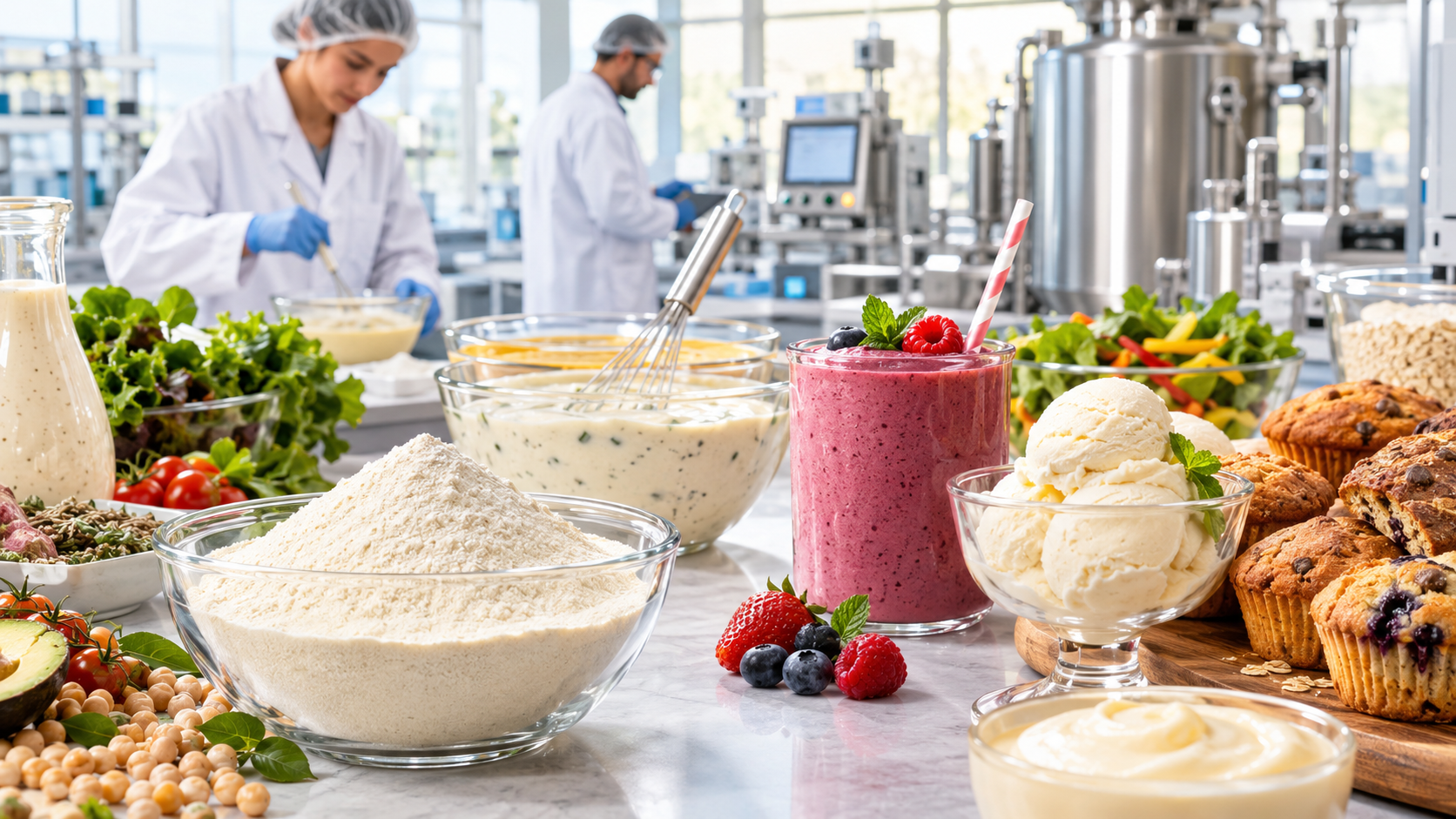
How to Use Guar Gum as a Thickener: Practical Guide for Food & Beverage Formulators
How to Use Guar Gum as a Thickener
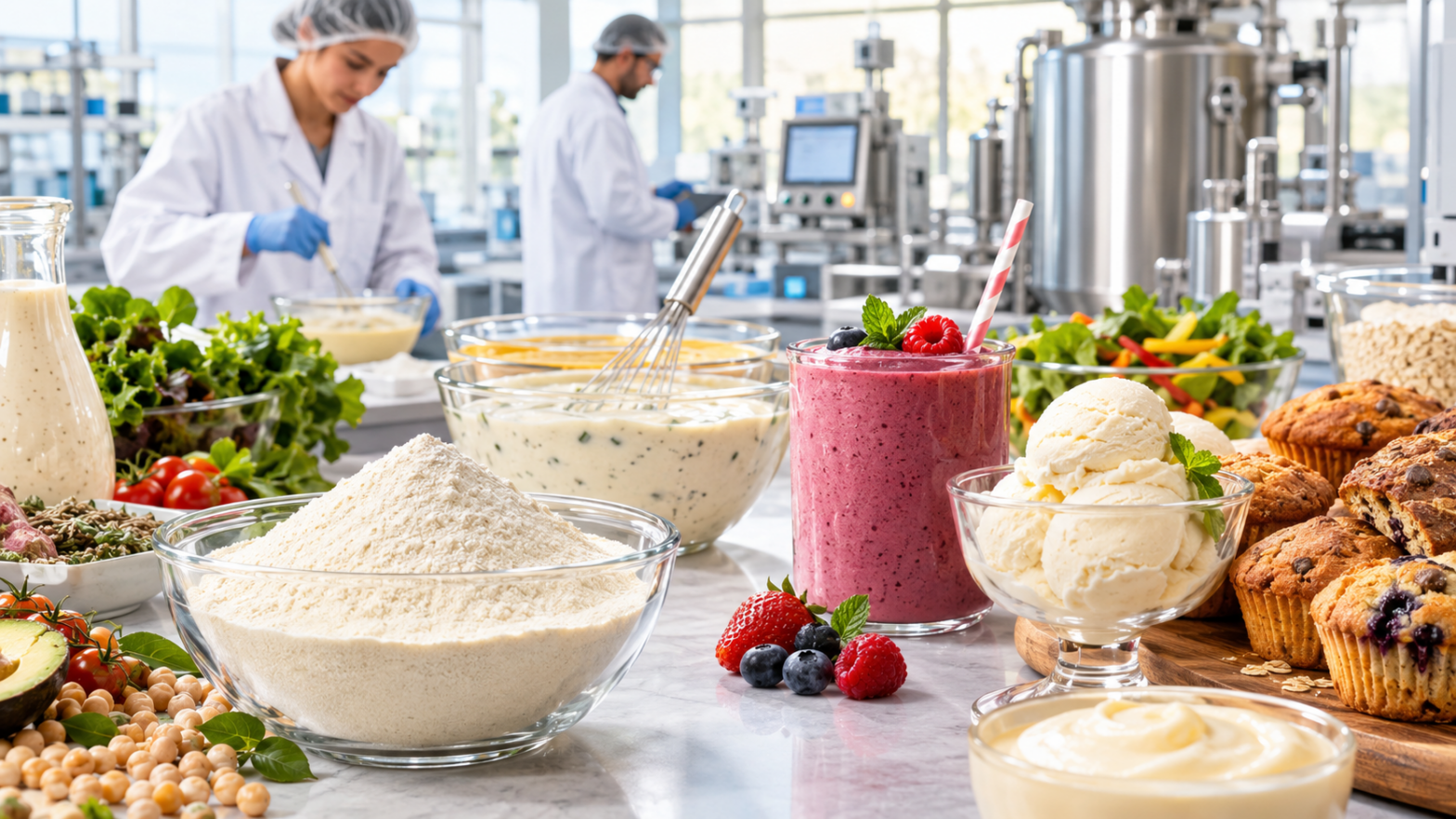
Guar gum is a potent natural thickening agent derived from guar seeds, known for its exceptional thickening properties. It is widely used in gluten-free baking, sauces, salad dressings, and frozen desserts due to its ability to enhance texture and consistency.
This versatile ingredient offers high thickening power even at low dosages, making it a cost-effective choice in food production. Guar gum works effectively in both hot and cold applications, allowing it to thicken sauces without heat and improve the smooth texture of cold foods like ice cream and salad dressings. Its soluble dietary fiber content also contributes to digestive health, adding potential benefits beyond just thickening.
Because of these qualities, guar gum is ideal for a variety of food products. In this guide, we will discuss what guar gum as a thickening agent is exactly, its basic principles and its best practices.
Guar Gum in Ice Cream and Other Frozen Desserts
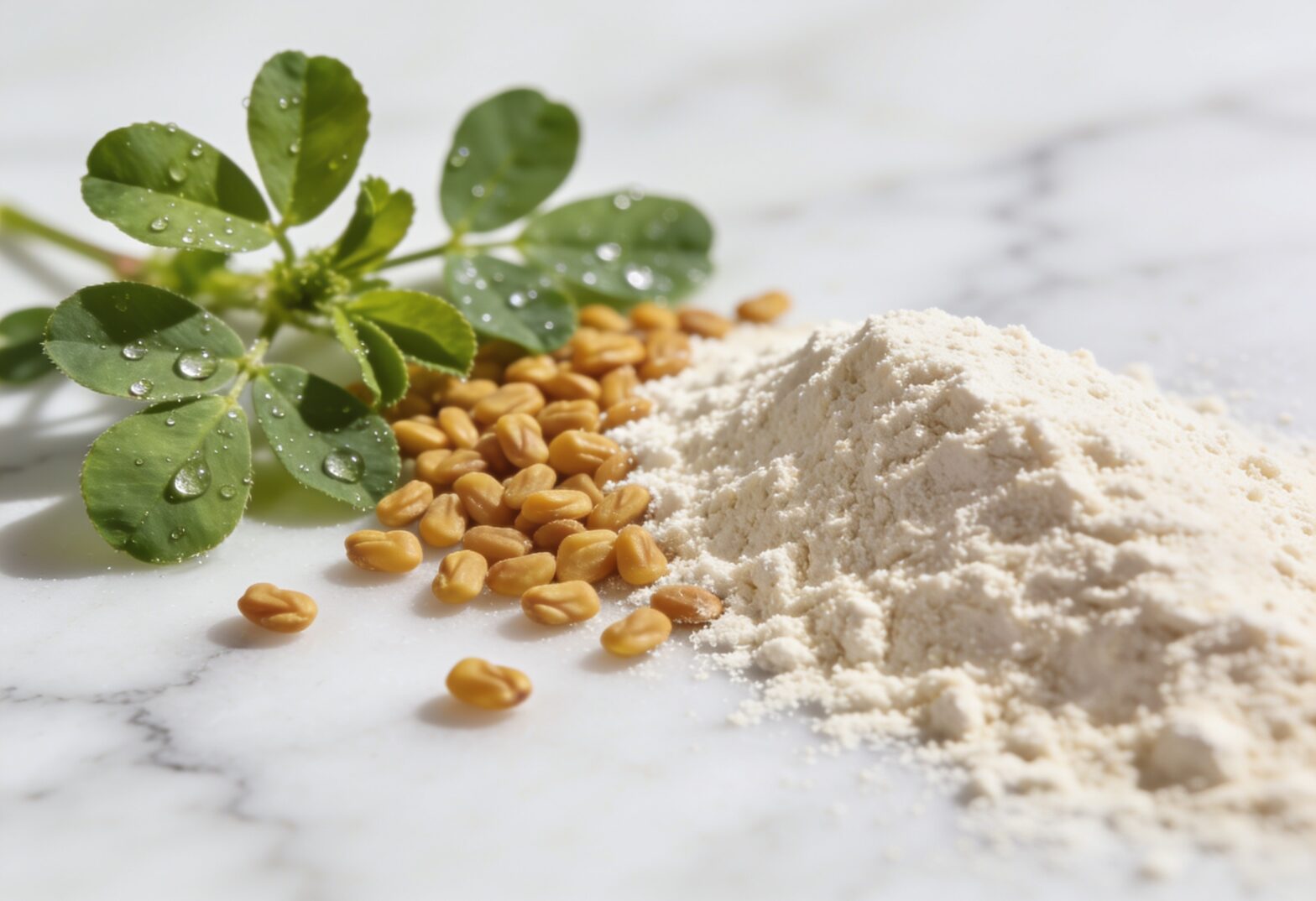
Guar gum is derived from guar seeds, which come from the guar plant (Cyamopsis tetragonoloba). These seeds are dehusked and milled into a fine guar gum powder. At the molecular level, guar gum is a non-ionic polysaccharide composed mainly of galactomannan. Thanks to this structure, the agent gains strong water-binding and thickening abilities.
Key functional benefits of guar gum include:
- High water-binding capacity that increases viscosity.
- Soluble in cold water, thickening without heat.
- Prevents ice crystal formation in frozen foods.
- Enhances texture and stability in gluten-free baked goods and doughs.
- Supports reduced-fat and dairy-free product formulations by improving mouthfeel.
Sunita Hydrocolloids Inc. (SHI) manufactures high-quality guar gum powder. Our products meet strict food-grade certifications, including halal, kosher, and quality management standards. SHI ensures consistent supply and quality for diverse food industry applications.
Basic Principles of Using Guar Gum as a Thickening Agent
Guar gum is much more potent than traditional starches. Even small changes in the amount used can greatly affect the viscosity and texture of the product. This makes accurate dosing essential for achieving the desired results.
Do note that the usage of guar gum as a thickening agent varies by food type. To help you better understand this, we have shared the recommended usage of guar gum below.
- Beverages: 0.1–0.3%
- Sauces and dressings: 0.2–0.5%
- Frozen desserts: 0.3–0.8%
The most significant property of guar gum is its ability to quickly hydrate in cold water systems to give highly viscous solutions. Moreover, it thickens without heat, which is ideal for cold dishes. However, do note that there are also other factors that influence guar gum’s performance, such as the ones we have listed below.
- pH: Works best in neutral to slightly alkaline conditions.
- Salt: High salt concentrations can reduce thickening.
- Sugar: High sugar levels may affect hydration and viscosity.
How to Use Guar Gum in Gluten-Free Baking
Guar gum plays a crucial role in gluten-free baking, as it actively replaces gluten’s structure and retains moisture. Moreover, gluten acts as a binding agent itself, as it gives the dough elasticity and helps baked goods hold together. Guar gum mimics these properties by adding elasticity and moisture. As a result, it improves the texture of gluten-free doughs and prevents crumbling.
Compared to xanthan gum, guar gum works best in cold and low-acid foods and offers a creamy, slightly gummy texture. Xanthan gum is more heat and acid-stable and is often used at lower levels, especially in yeast breads and acidic recipes.
Using Guar Gum in Sauces, Gravies, and Salad Dressings
Guar gum thickens food effectively without the need for heat. Due to this, it has become the ideal choice of thickener for cold sauces, gravies and salad dressings where heating is not possible or desired. The agent quickly hydrates cold liquids and provides a texture that is both creamy and smooth.
Dosage ranges vary by application:
- Cold foods: 1 to 2 teaspoons per quart of liquid.
- Hot foods: 1 to 3 teaspoons per quart of liquid.
Do note that when using Guar Gum for sauces, gravies and salad dressings, the range can vary by application. In order to ensure smooth dispersion and avoid clumps, it is best to slowly sprinkle the agent into the liquid while stirring vigorously. If you want to achieve a uniform texture, then a blender or high-shear mixer will be ideal.
Guar Gum in Ice Cream and Other Frozen Desserts
Guar gum plays a vital role in frozen desserts. It controls ice crystal formation, preventing large crystals that create a grainy texture. In addition to this, guar gum also offers other strong benefits, such as the ones we have listed below, for ice cream and other frozen desserts.
- Enhances creaminess and texture.
- Significantly improves stability during freeze-thaw cycles.
- Extends shelf life of frozen goods.
- Supports low-fat and plant-based frozen products by compensating for reduced fat content.
Sunita Hydrocolloids Inc. (SHI) offers specialized guar gum grades tailored for frozen dessert applications. SHI provides technical support to optimize formulation and achieve the desired texture and stability in your products.
Other Food Applications: Beverages, Soups, and Specialty Products
Guar gum is highly versatile and used in many food products beyond baking and frozen desserts. It thickens beverages like smoothies and protein shakes without altering their flavor. This makes it one of the most favored food gums.
In soups and gravies, on the other hand, guar gum provides a smooth, creamy texture. It thickens sauces effectively without needing heat, which helps retain fresh flavors. This is especially useful in cold soups and dressings.
Guar gum also works well in specialty products such as dairy alternatives like almond flour or coconut milk-based drinks. It helps stabilize these beverages by preventing separation of solid particles and liquids.
As it is a gluten-free agent, guar gum is a preferred thickener in gluten-free foods and recipes. Moreover, it supports dietary restrictions while improving texture and mouthfeel. Guar gum offers a plethora of benefits as a food additive. It enhances texture, stability, and consistency in a wide range of products, making it an essential ingredient for food formulators.
Best Practices for Measuring, Dispersing, and Storing Guar Gum
Guar gum is a natural hydrocolloid and is commonly used across food and beverage industries. However, in order to get proper results from this thickening agent, there are certain steps that must be taken. Below, we have shared the best practices that you can follow for measuring, dispersing and storing guar gum.
1. Accurate Measurement is Key
Guar gum is a very potent thickener. Using too much guar gum can lead to undesirable textures like gumminess or stringy baked goods. Therefore, accurate measurement is crucial.
- Use a precise scale or measuring spoon.
- Follow the recipe calls carefully.
- Start with the recommended dosage for your specific application.
2. Gradual Addition and Proper Dispersion
To avoid lumps and clumps, add guar gum slowly and gradually. This helps it disperse evenly and hydrate properly. By following the steps we have shared below, you will be able to ensure proper dispersion and a smooth, creamy texture without any type of graininess or lumps.
- Sprinkle guar gum powder slowly into the liquid while stirring continuously.
- Use a whisk, blender, or high-shear mixer for best results.
- Avoid dumping guar gum all at once to prevent clumping.
3. Storage Tips for Maintaining Quality
Guar gum powder is sensitive to moisture and humidity. Improper storage can cause clumping and reduce its effectiveness. Therefore, you can follow the storage practices we have shared below to maintain guar gum’s quality and extend its shelf life.
- Store guar gum in an airtight container.
- Keep it in a cool, dry place away from direct sunlight.
- Avoid exposure to humidity or moisture.
Quality Control and Consistency at Sunita Hydrocolloids Inc.
Sunita Hydrocolloids Inc. (SHI) is committed to providing guar gum with consistent quality and performance.
- SHI follows strict food-grade certifications, including halal and kosher.
- Each batch undergoes rigorous quality control testing.
- This ensures uniform particle size, purity, and thickening power.
- Consistent batches help food formulators achieve reliable and repeatable results.
By combining precise measurement, gradual dispersion, proper storage, and SHI’s quality assurance, you can maximize the benefits of guar gum as a thickening agent in your recipes and formulations.
Working With Sunita Hydrocolloids Inc. for Guar Gum Solutions
With over 40 years of expertise, Sunita Hydrocolloids Inc. (SHI) offers a broad range of high-quality guar gum products. Our SUNCOL series includes SXL and other specialized grades designed for diverse food applications. These products excel in gluten-free baking, frozen desserts, salad dressings, dairy, beverages, and confectionery.
SHI provides comprehensive technical support and custom blending services to meet your specific formulation needs. We also offer reliable logistics and global supply to ensure consistent availability.
Our guar gum products come with strict certifications, including halal and kosher, guaranteeing food safety and quality standards worldwide.
FAQ
Can guar gum replace all other thickeners in my formulation?
No, guar gum cannot replace all other thickeners. While it is a good alternative to many thickeners, it performs poorly with highly acidic applications (vinaigrette) and structural gels and jellies (puddings and jellies).
How does guar gum compare to xanthan gum in gluten-free applications?
Xanthan gum provides elasticity and structural stretch ideal for yeast breads, while guar gum offers soft water retention and works better in cookies, pastries, and cold foods. Both act as binders and thickeners in gluten-free cooking, but they differ in source, stability, and texture.
Is guar gum suitable for clean label and natural-positioned products?
Yes, our guar gum products are suitable and highly effective for clean label and natural-positioned products.
What processing conditions can damage guar gum performance?
The performance of guar gum can be damaged in prolonged high heat, especially when combined with strong acidity (pH < 4). This can cause the long polymer chains of guar gum to break down, resulting in irreversible loss of viscosity.
Can I use the same guar gum grade in food, pharma and personal care products?
No, the exact grade of guar gum cannot be used in food, pharma and personal care products. This is because each industry requires distinct purity levels, microbial limits and functional specifications. The same grade of guar gum cannot fulfill these requirements for different industries.